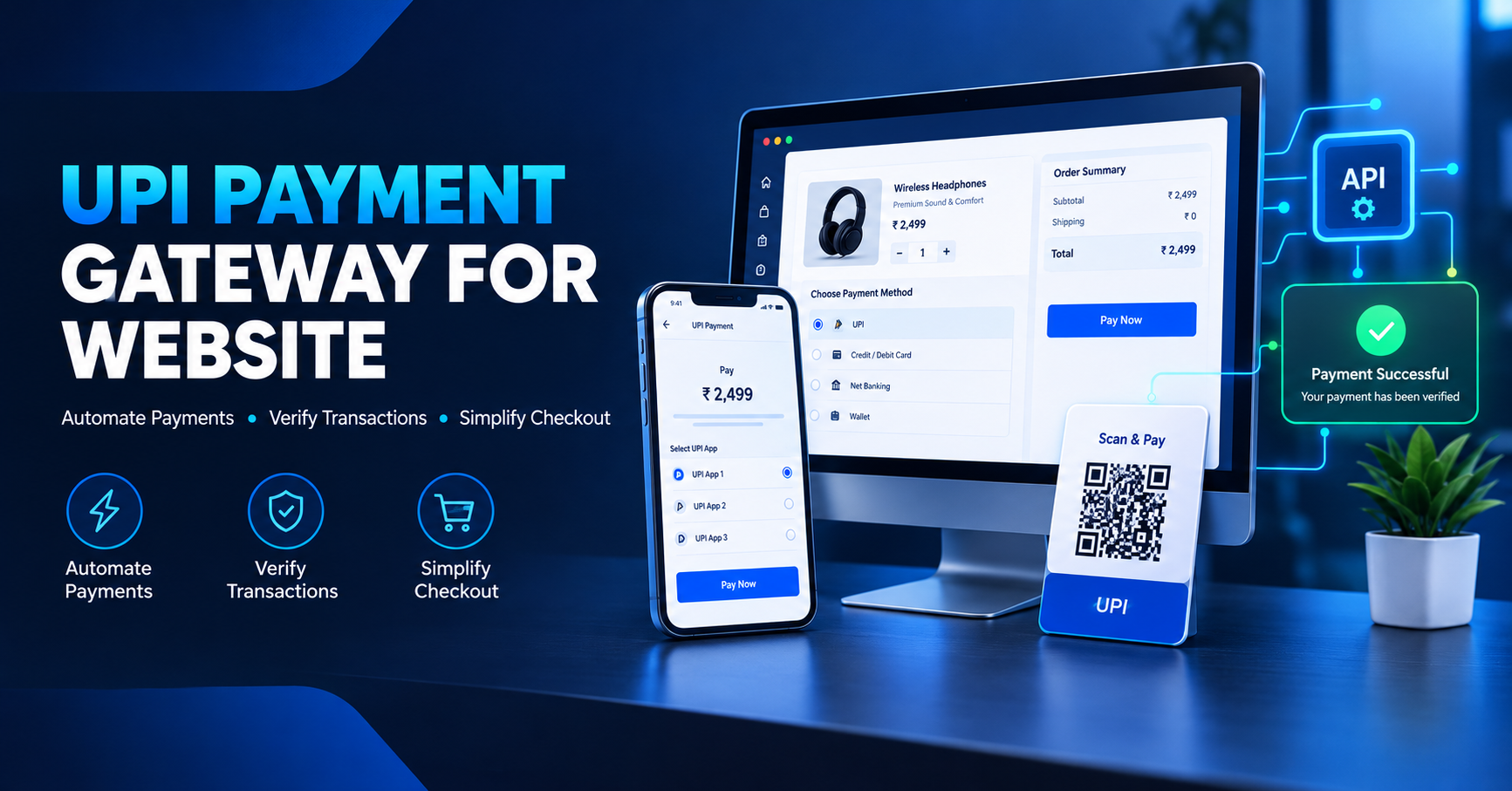
UPI Payment Gateway for Website: Automate Payments with Your Existing Merchant UPI
Introduction
UPI has become one of the most convenient payment methods for businesses and customers in India. From e-commerce stores and digital service providers to online platforms and mobile applications, businesses increasingly rely on UPI to collect payments quickly and efficiently.
However, collecting UPI payments on a website is only one part of the process. Businesses also need a reliable way to verify transactions, update order statuses, and reduce manual payment confirmation.
If you are searching for a UPI payment gateway for a website, it is important to understand how payment collection and payment verification can work together.
JaduPe helps businesses connect their existing Merchant UPI ID or QR code with smart payment automation technology. The goal is to simplify payment verification, reduce repetitive manual work, and deliver a smoother payment experience on websites and applications.
What Is a UPI Payment Gateway for a Website?
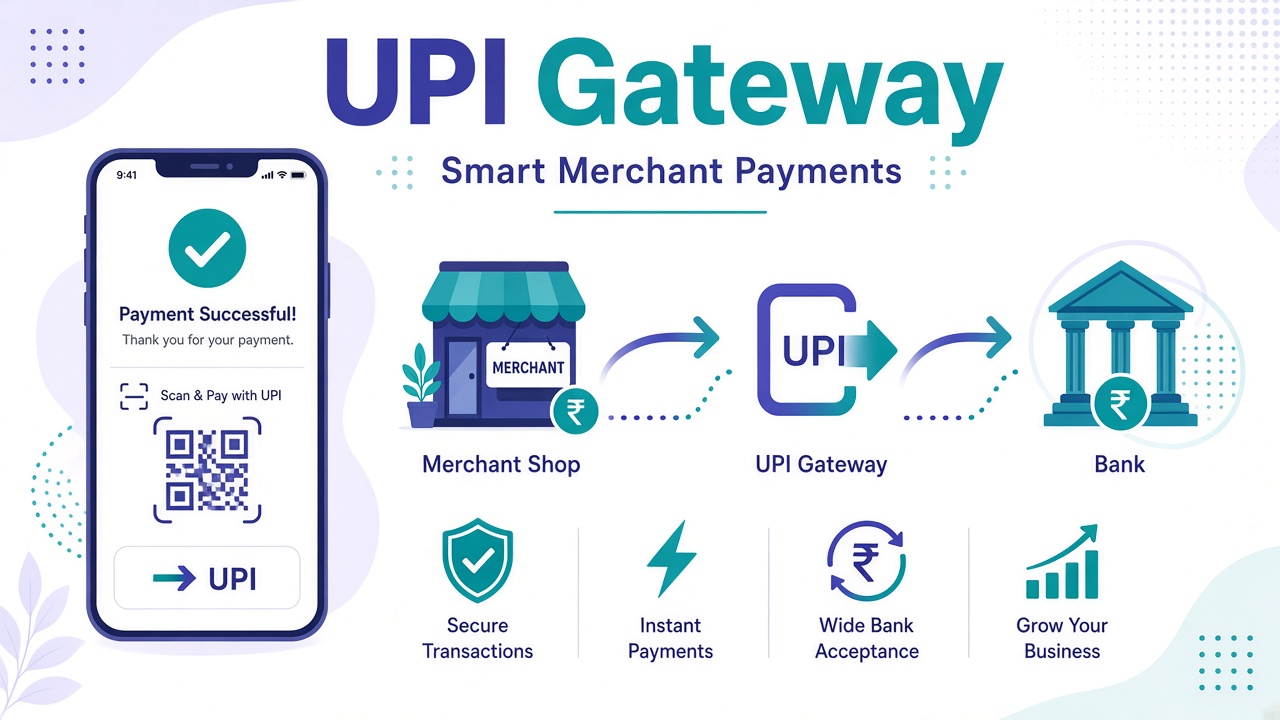
A UPI payment gateway for a website is a payment integration solution that helps businesses accept UPI payments through supported payment flows and manage transaction-related updates.
Depending on the integration, a business may offer customers a UPI QR code, a supported UPI app payment option, or another compatible payment flow.
Modern payment integrations can also help automate tasks such as:
-
Generating payment requests or dynamic QR codes.
-
Checking payment status through supported systems.
-
Updating order status after payment confirmation.
-
Sending transaction updates through APIs or webhooks.
-
Reducing manual payment verification.
The features available depend on the provider, the merchant's setup, and the supported integration method.
Why Do Websites Need UPI Payment Automation?
Accepting UPI payments manually can become difficult when a website starts receiving more orders.
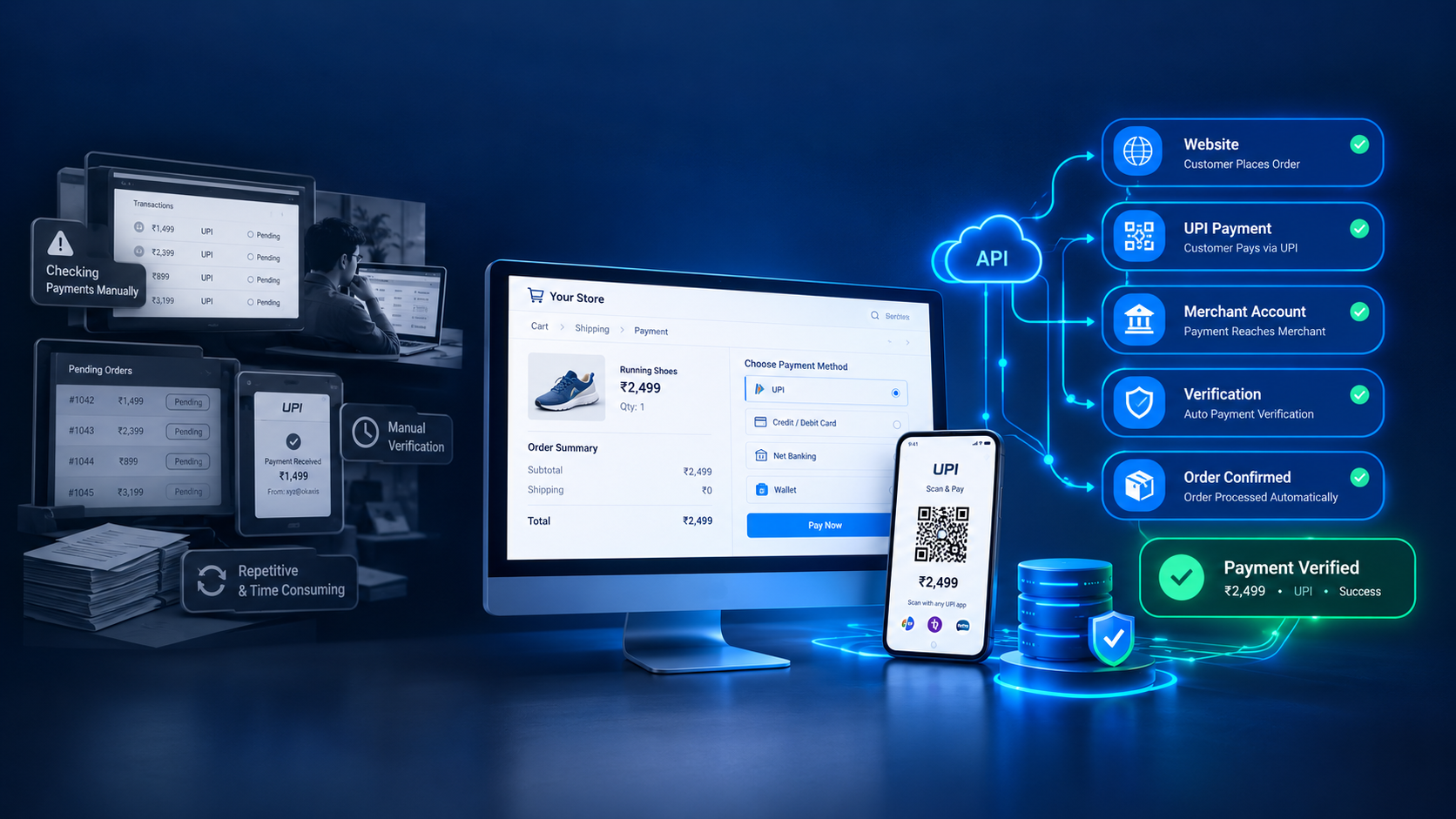
For example, a business might ask customers to scan a QR code and then share a payment screenshot. Someone from the team must check the transaction, confirm the amount, and update the order manually.
This process can create delays and unnecessary work.
Payment automation can help address these challenges.
1. Reduce Manual Payment Verification
Manually reviewing payment screenshots takes time and may introduce errors. An automated integration can use supported transaction-status information to help verify payments.
Businesses should rely on authorized transaction data rather than screenshots alone.
2. Improve the Customer Experience
Customers want a simple checkout process. A well-integrated UPI payment flow can help customers complete payments without unnecessary steps.
3. Automate Order Status Updates
When a payment is successfully verified through the supported integration, the website can update the corresponding order status automatically.
This can reduce the need for staff to update every order individually.
4. Support Business Growth
As transaction volumes increase, manual processes can become harder to manage. Payment automation helps businesses streamline repetitive tasks and improve operational efficiency.
How JaduPe Helps Automate UPI Payments
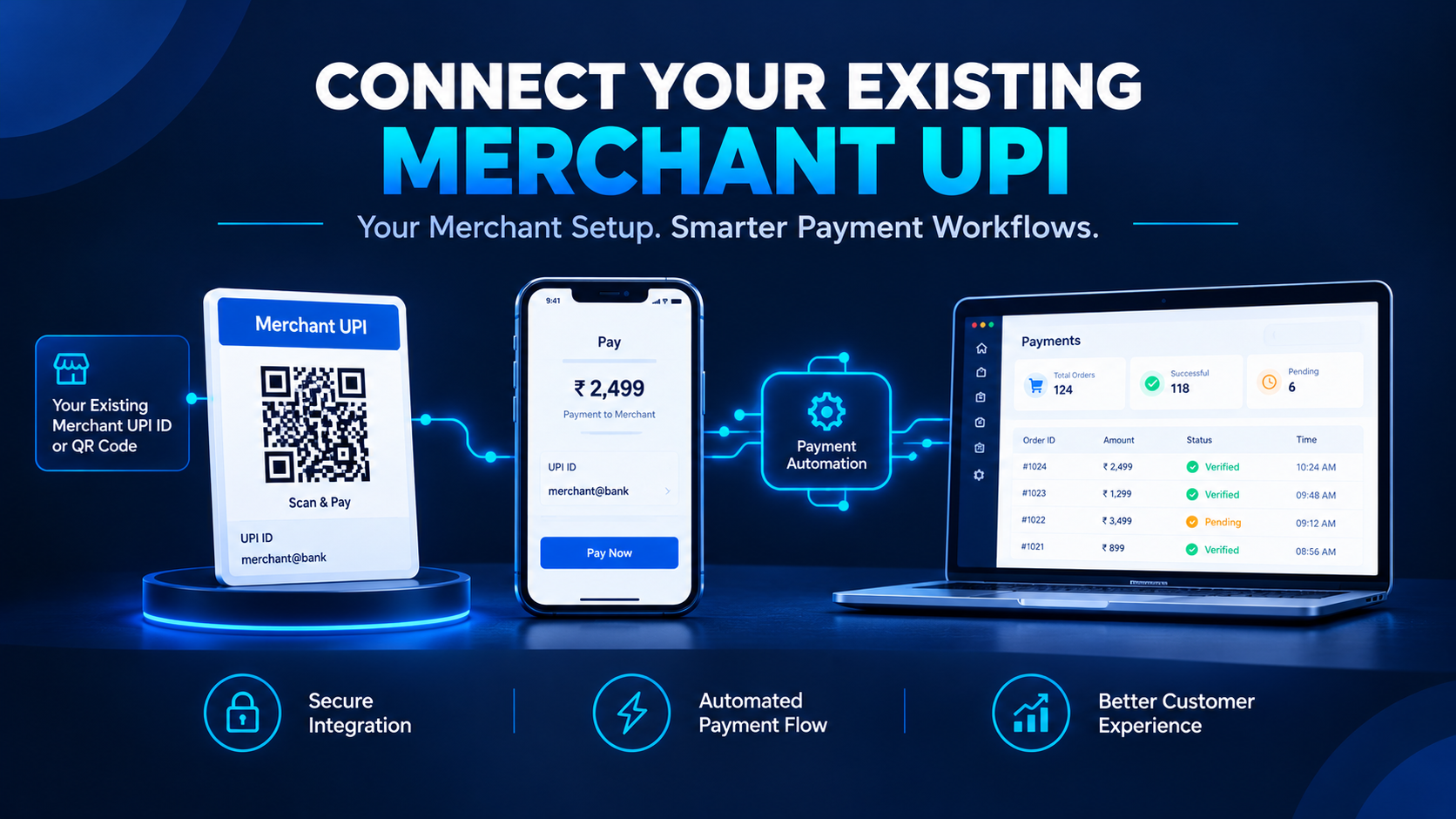
JaduPe focuses on payment automation using a business's existing Merchant UPI ID or QR code, subject to compatibility and supported integration capabilities.
Instead of assuming that every business must replace its current payment setup, JaduPe aims to help businesses connect their existing merchant payment arrangement with website or application workflows.
Key capabilities may include:
-
Merchant UPI Integration: Connect a supported existing Merchant UPI ID or QR code.
-
Dynamic QR Generation: Generate payment-specific QR codes where supported.
-
Payment Status Verification: Automate verification using supported transaction-status mechanisms.
-
Payment Status Webhooks: Send transaction updates to integrated applications where supported.
-
API Integration: Connect payment workflows with website backends and applications.
-
Website and Mobile App Support: Build payment-related workflows into compatible digital platforms.
Actual features and availability depend on the selected integration and merchant configuration.
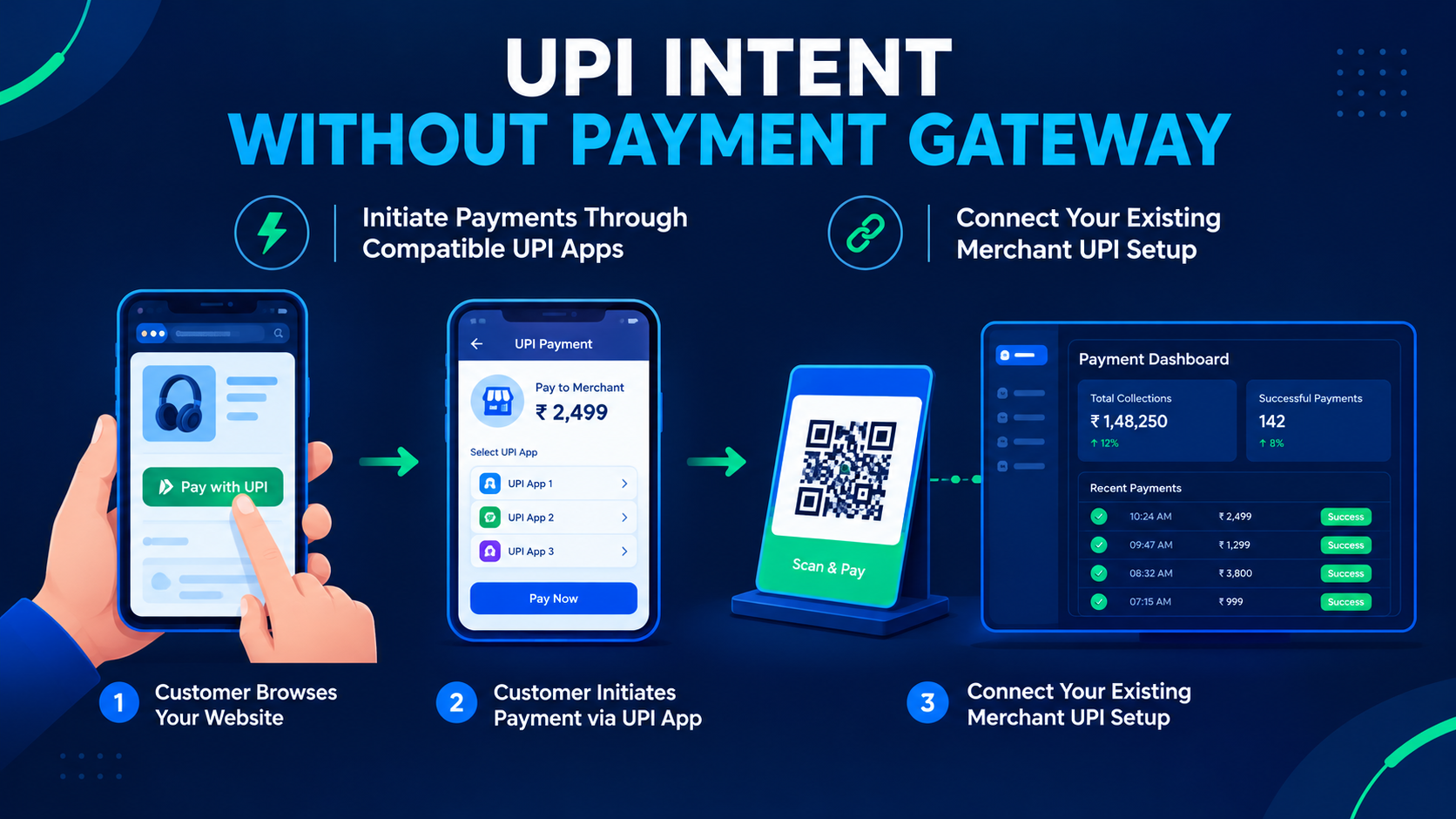
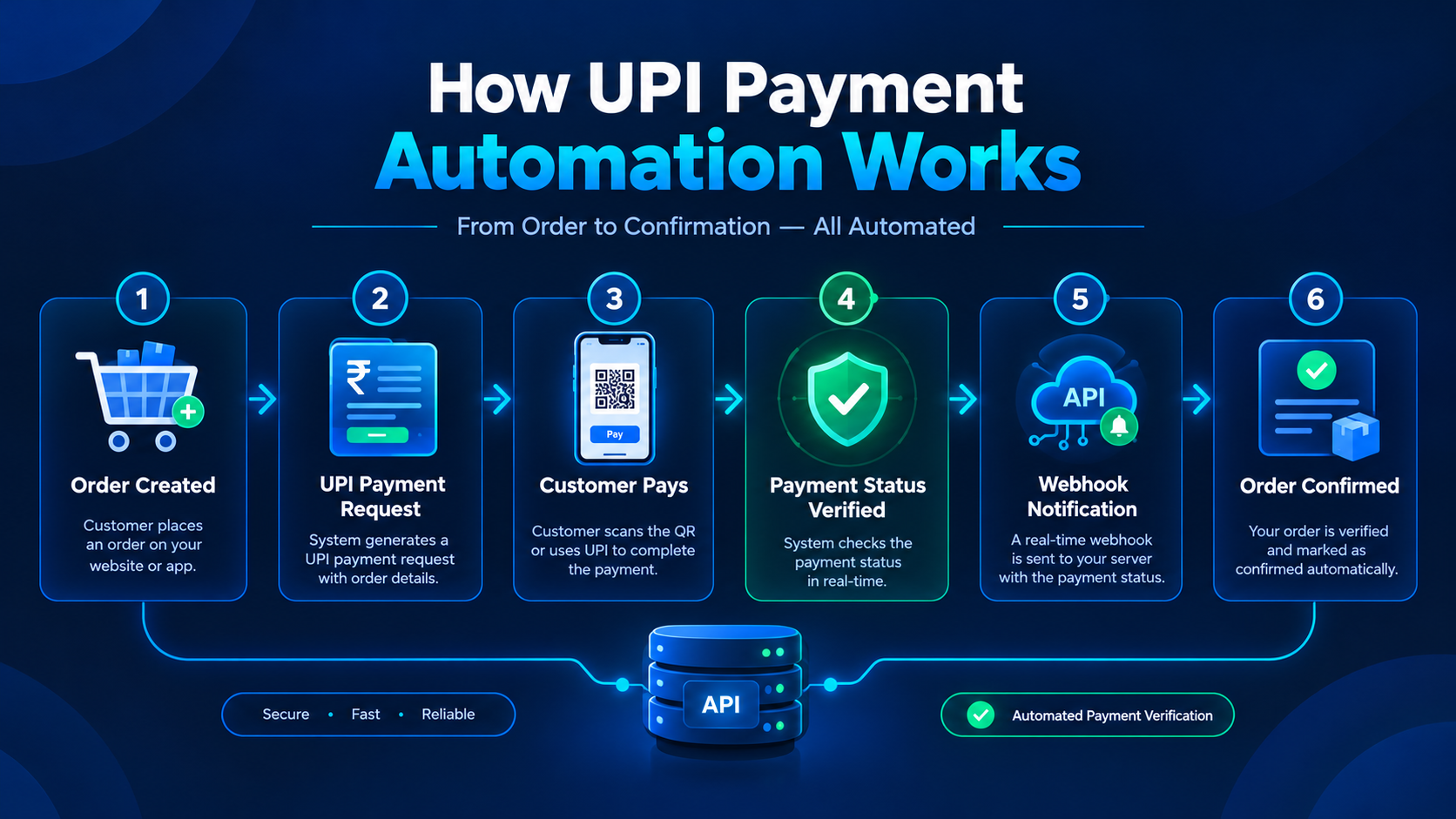
How UPI Payment Automation Works on a Website
A typical payment automation workflow can follow these steps:
Step 1: Customer Places an Order
A customer visits your website, selects a product or service, and proceeds to checkout.
Step 2: The Website Initiates a UPI Payment
The website displays an available payment option, such as a supported UPI payment flow or QR code.
Step 3: Customer Completes the Payment
The customer pays through a compatible UPI application or another supported payment method.
Step 4: Payment Status Is Verified
The integration checks the transaction using its supported verification mechanism. The website should not treat a customer-provided screenshot as definitive payment confirmation.
Step 5: The Website Updates the Order
After successful verification, the website can update the payment status and proceed with the next step in the order workflow.
Step 6: The System Sends an Update
Where supported, a webhook or API response can notify the website or application about the transaction status.
This workflow helps reduce manual intervention and creates a more organized payment experience.
Can You Use Your Existing Merchant UPI ID?
Many businesses already use a Merchant UPI ID or business QR code for collecting payments. Moving to a different payment setup may require additional configuration, operational changes, or provider onboarding.
JaduPe is designed around connecting a business's existing Merchant UPI ID or QR code with payment automation technology, subject to technical compatibility and the required authorization.
Before integrating, businesses should confirm whether their merchant account and payment setup support the required transaction verification and automation features.
An existing UPI ID or QR code alone does not guarantee access to automated transaction data. The verification method must be supported by the relevant payment provider or authorized integration.
UPI Payment Gateway for E-commerce Websites
E-commerce businesses often need to coordinate payment confirmation with inventory, order processing, and customer notifications.
A suitable UPI payment integration can help streamline these activities.
For example, an online store may use payment verification to:
-
Confirm whether an order has been paid.
-
Reduce delays caused by manual checks.
-
Trigger order-processing workflows.
-
Send payment-related notifications.
-
Connect payment updates with its backend system.
Businesses using platforms such as Shopify, WooCommerce, or custom-built websites should check the compatibility of the specific integration before implementation.
UPI Payment Integration for Custom Websites and Applications
A custom website may require more control over its checkout process and backend workflows.
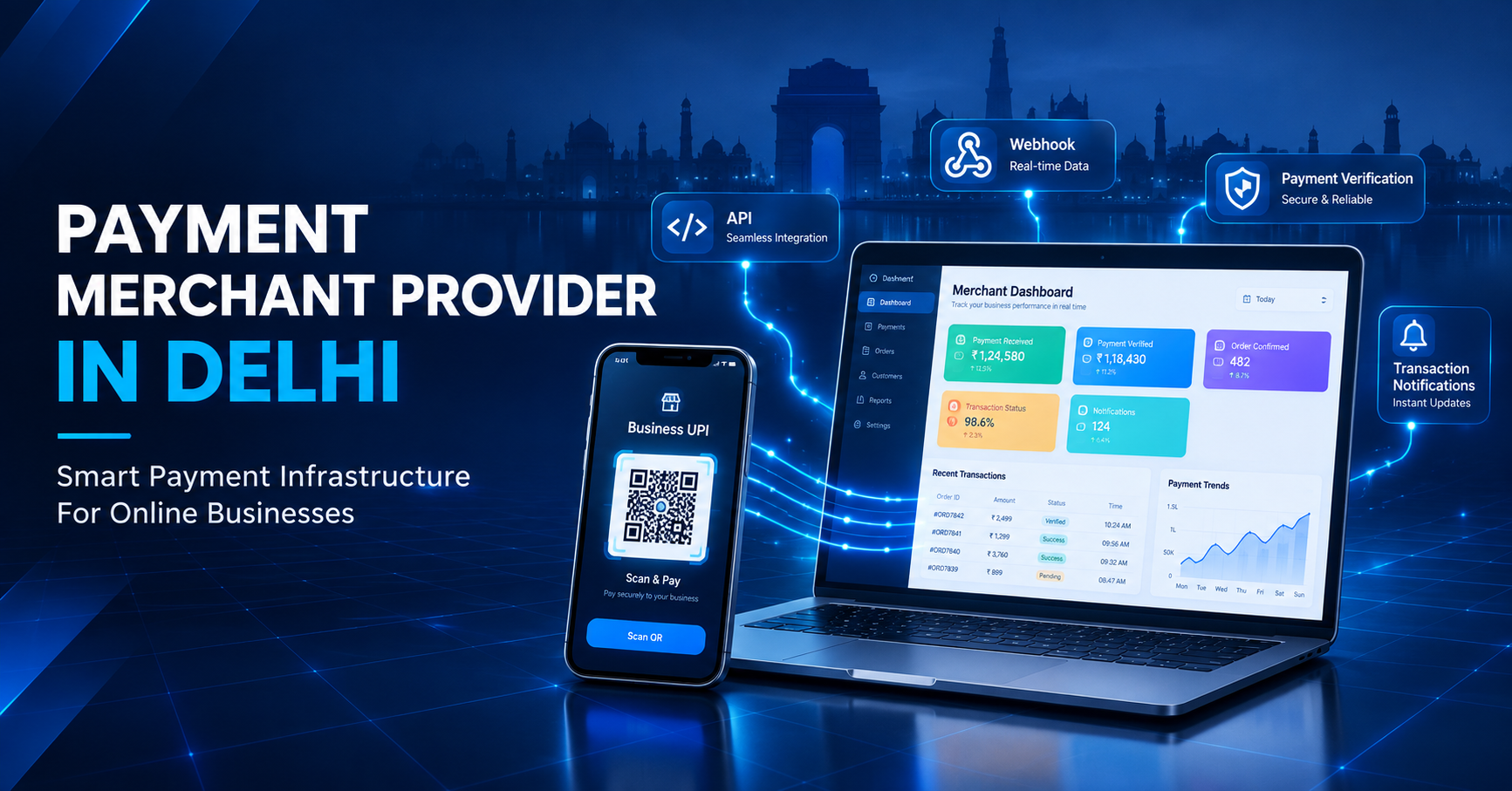
API-based integrations can help developers connect payment-related functionality with an application's existing architecture. Webhooks, where supported, can communicate transaction updates to the backend.
Before implementation, developers should evaluate authentication, transaction matching, duplicate notifications, payment timeouts, failed payments, and reconciliation procedures.
These checks help ensure that the website handles payment statuses consistently and securely.
UPI Automation vs Manual Payment Verification
| Feature | Manual Process | Automated Integration |
|---|---|---|
| Payment confirmation | Staff checks transactions | Supported status verification |
| Order updates | Often manual | Can be automated |
| Screenshot dependency | May be high | Can be reduced |
| Transaction notifications | Manual follow-up | API or webhook, where supported |
| Growing transaction volume | More repetitive work | More streamlined workflows |
The actual benefits depend on transaction verification capabilities, integration quality, and the business's existing payment process.
Is JaduPe a Traditional Payment Gateway?
JaduPe focuses on payment automation using compatible existing Merchant UPI IDs or QR codes rather than positioning itself as a provider of new merchant banking accounts.
Its intended role is to help businesses integrate payment-related workflows into their websites and applications.
JaduPe does not position itself as a bank or a provider of customer fund custody. Businesses must confirm the applicable provider terms, regulatory requirements, and their own compliance responsibilities before implementation.
The availability of any payment collection or verification feature depends on the underlying merchant setup and supported technical integrations.
How to Get Started with JaduPe
If you want to automate UPI payment verification on your website, start by reviewing your existing payment setup and technical requirements.
-
Identify the Merchant UPI ID or QR code you currently use.
-
Determine which transaction-verification methods your merchant setup supports.
-
Review the required API, QR, and webhook capabilities.
-
Confirm compatibility with your website or mobile application.
-
Test successful payments, failed transactions, duplicate notifications, and reconciliation before going live.
JaduPe can help businesses explore how their existing merchant payment setup may be connected with supported payment automation workflows.
Frequently Asked Questions
1. What is the best UPI payment gateway for a website?
The right solution depends on your business model, merchant account, integration requirements, payment verification needs, and provider support. Compare the available features and compliance requirements before choosing a solution.
2. Can I integrate UPI payments into my existing website?
Yes. UPI payment functionality can be integrated into compatible websites through supported payment links, QR-based flows, APIs, or other integration methods.
3. Can I automate UPI payment verification?
Yes, when the payment provider or authorized integration supplies a reliable transaction-verification mechanism. The exact capabilities depend on the merchant setup and integration.
4. Do I need to change my existing Merchant UPI ID?
Not necessarily. Some automation solutions are designed to work with existing merchant arrangements, subject to compatibility and supported features. Confirm the requirements before implementation.
5. Does JaduPe support dynamic QR codes and webhooks?
JaduPe's stated feature set includes dynamic QR generation and payment status webhooks. Confirm the availability and technical requirements of these features for your particular merchant setup.
6. Is UPI payment automation suitable for small businesses?
It can be useful for small businesses, online stores, and service providers that want to reduce manual payment-related tasks. The right implementation depends on transaction volume, technical needs, and available verification support.
7. Can UPI payment automation work with a mobile application?
Yes. Compatible payment workflows can be integrated into mobile applications as well as websites, depending on the available APIs and supported payment methods.
Conclusion
A UPI payment gateway for a website should do more than provide a way to collect payments. Businesses can also benefit from reliable transaction verification, automated order updates, and streamlined payment workflows.
JaduPe helps businesses explore payment automation using their existing Merchant UPI ID or QR code, with the aim of reducing manual work and improving the payment experience across websites and applications.
If your business already accepts UPI payments and wants to simplify payment verification, explore how JaduPe's supported integration options may fit your existing setup.
Explore JaduPe: https://jadupe.com/